








How to Lose Belly Fat: What the Science Actually Shows
Authored by
The Evolv Research Team
“Nothing I do touches my belly fat.” People say it after years of diets, fat burners, and workout plans that moved the scale but never moved the waistline. The frustration is real, and so is the biology behind it.
To lose belly fat, you have to lose body fat overall. That means a moderate calorie deficit you can hold for months, protein at every meal, strength training plus cardio, enough sleep, less alcohol, and fewer sugary drinks. Crunches can’t pick where the fat comes from. The deepest belly fat, the kind wrapped around your organs, tends to be the first to go once that deficit is in place.
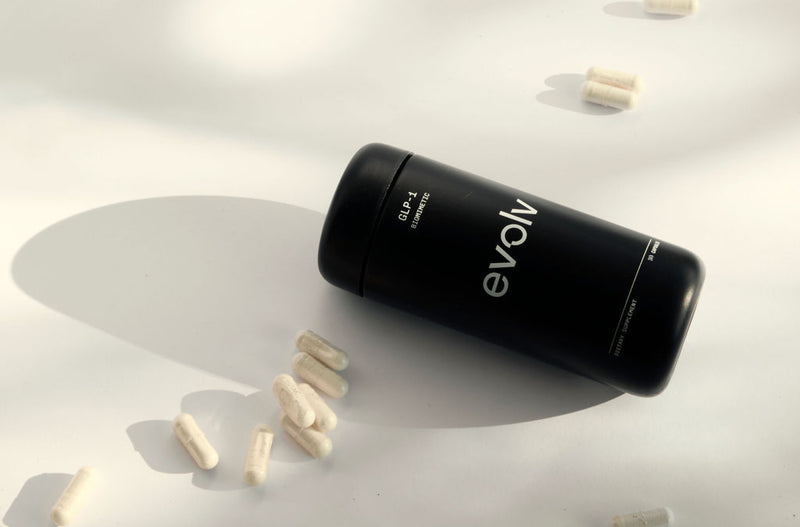
Holding the deficit is where most plans break, and appetite is usually what breaks them. That’s the lever Evolv works on. Its product, Evolv GLP-1, is the first oral GLP-1 biomimetic peptide.
How to Lose Belly Fat: 8 Science-Backed Ways
Exercise can’t pick which fat you lose. A meta-analysis pooling 13 studies with more than 1,100 participants found that training a specific muscle had no effect on the fat sitting over it. Lowering your body fat overall is what shrinks your waist, and the eight steps below cover the three things that drive it: what you eat, how you move, and the daily habits around both.
1. Eat in a Calorie Deficit You Can Keep
A deficit is non-negotiable, but its size decides whether you can keep it. A pound of body fat stores roughly 3,500 calories, so eating about 500 fewer calories a day works out to about a pound a week. The CDC notes that people who lose 1 to 2 pounds a week are more likely to keep the weight off, and our guide to sustainable weight loss explains why that pace holds up.
If you want to lose belly fat fast, this is still the pace to aim for. Crash diets cost you muscle and other lean tissue along with fat, and less lean tissue can lower the number of calories your body burns at rest. Moderate loss is also where visceral fat responds best.
2. Build Meals Around Protein and Fiber
Protein is the dietary lever with the clearest effect on appetite hormones. A meta-analysis of 49 short-term trials found that protein-rich meals lowered ghrelin, the hormone that drives hunger, and raised GLP-1, with the clearest changes at 35 grams or more. Protein also protects muscle while you’re in a deficit.
Soluble fiber pulls in the same direction. In a five-year study of more than 1,100 adults, every extra 10 grams of soluble fiber a day was linked to a 3.7% slower rate of visceral fat gain. Oats, beans, lentils, flaxseed, and avocado are easy sources, and fiber is one of the natural ways to increase GLP-1 your body already makes. Swapping refined carbs and added sugar for these foods also keeps insulin, the hormone that tells cells to store energy, from staying high all day. Our guide on how to feel full longer goes further into meal structure.
3. Add Strength Training
Resistance work protects the muscle you want to keep while the fat comes off. A meta-analysis of six trials in older adults with obesity found that adding resistance training prevented about 93.5% of the muscle and other lean-tissue loss that dieting alone caused.
That’s why strength training is the main safeguard if you’ve been reading about GLP-1 and muscle loss, and it’s the foundation of body recomposition, losing fat while you build muscle.
4. Keep Cardio in the Mix
Harvard Health points to the combination of aerobic and resistance exercise as the way to tap into stored visceral fat, so cardio belongs alongside the weights rather than instead of them. Intervals are an efficient way to fit it in. In a 12-week trial in young women with obesity, high-intensity interval training cut visceral fat area by 9.7 square centimeters, roughly the size of a large postage stamp in a cross-section scan.
5. Sleep Seven to Nine Hours
Short nights work against every other step. Two nights of four-hour sleep in a study of healthy young men dropped leptin, the hormone that signals fullness, by 18% and raised ghrelin by 28%. A consistent bedtime, including on weekends, is easier to protect than a perfect one.
6. Keep Stress in Check
Visceral fat is especially responsive to cortisol, the body’s main stress hormone, so long stretches of stress work against fat loss. Movement and steady sleep both help bring it down. When stress turns into eating, how to stop emotional eating walks through what drives that pattern.
7. Limit Alcohol and Sugary Drinks
Alcohol is easy to underestimate. In the Framingham Heart Study, men who drank more than 14 drinks a week carried more visceral fat than men who drank less. Drinks also add calories that rarely make you feel full, so cutting back on alcohol and sweetened drinks is one of the simpler changes on this list.
8. Support Your GLP-1 Appetite Pathway
The first seven steps create the conditions for fat loss. What usually breaks the plan is appetite, the steady pull to eat more than the deficit allows.
GLP-1 sits at the center of that pull. It’s a hormone your own gut makes, and it tells your brain, stomach, and pancreas that you’ve eaten. GLP-1 isn’t an ingredient you can swallow, so every product that carries the name, prescription or supplement, works on the pathway that hormone uses. Protein and soluble fiber are the food-based ways to support it, which is why they appear in step 2. For more direct support, there’s now a category of biomimetic products designed to engage that pathway itself.
Evolv GLP-1 is a natural biomimetic dietary supplement built around a proprietary yeast-derived peptide designed to support GLP-1 and GIP appetite pathways.
The EV1 Peptide at the center of the formula is bioengineered and yeast-derived, and it is designed to support your own GLP-1 and GIP appetite pathways. GLP-1 and GIP are two gut hormones that help tell you a meal was enough. The science behind the EV1 Peptide goes deeper into how. In practice, quieter food noise is what makes the deficit from step 1 something you can hold.
In Evolv’s clinical study, over 8 weeks, participants lost up to 12+ lbs, ate approximately 750 fewer calories per day, and saw up to 4+ inches of waist reduction. Individual results vary.
Hunger stays part of the picture. As Becca McCarthy explained on the Mom Curious podcast, it doesn’t mean you’re not hungry or that you don’t eat: “It just resets your biology” in a way that allows you to have a choice. For belly fat, that choice is what lets the deficit last long enough to show up on the tape measure.
What Is Visceral Fat?
Belly fat comes in two layers. Subcutaneous fat is the layer you can pinch, just under the skin, and it’s slow to shrink. Visceral fat sits deeper, packed around your liver, intestines, and other organs. It’s metabolically active, meaning it constantly releases fatty acids and inflammatory signals into the bloodstream that feed the liver, which is why it’s the layer most closely tied to health.
It’s also the layer that responds first. A review of 61 studies found that visceral fat is lost preferentially with modest weight loss, and in a long-term trial covered by the Harvard T.H. Chan School of Public Health, every 10% of visceral fat people lost was linked to about a 28% lower risk of type 2 diabetes a decade later.
How to Measure Your Waist
Wrap a tape measure around your middle at about navel level, just above your hipbones, and read it right after you breathe out. The National Heart, Lung, and Blood Institute links a waist of more than 35 inches for women or more than 40 inches for men with higher health risk. Your waist changes more slowly than your weight, so a reading every few weeks tells you more than a daily one.
What Causes Belly Fat to Accumulate?
Several forces push fat toward your middle, and most of them stack on top of each other.
Cortisol sensitivity. Visceral fat carries roughly two to four times more cortisol-receptor activity than the fat under your skin, according to a review by Lee and colleagues. Cortisol is the body’s main stress hormone, and working together with insulin it switches on the genes that help fat cells store more. When stress stays high for weeks or months, the deepest belly fat is the tissue most ready to listen.
Changing sex hormones. As people age, shifts in sex hormones move fat storage toward the middle for many adults. For women, falling estrogen through perimenopause and menopause drives a specific redistribution, which our guide to menopause belly fat covers in depth.
Short sleep. In a tightly controlled Mayo Clinic trial, 12 healthy adults spent two weeks sleeping about four hours a night. They ate roughly 300 extra calories a day, their total abdominal fat rose by 9%, and their visceral fat rose by about 11%. Three days of catch-up sleep didn’t reverse it; the visceral fat kept climbing.
Refined sugar and frequent insulin spikes. Diets heavy in added sugar and refined carbs keep insulin, the hormone that tells cells to store energy, elevated through much of the day. Insulin is one of the signals that, alongside cortisol, drive storage in the deepest belly fat.
The appetite loop. GLP-1 is a hormone your gut releases after you eat, and it’s one of the main signals that tell your brain a meal was enough. When that fullness signal is weak, eating less feels like a constant fight. Many people know that fight as food noise: persistent, unwanted thoughts about food that don’t match how hungry you actually are. In 2025, a group of obesity researchers published a formal definition of food noise in Nutrition & Diabetes, describing thoughts intrusive enough to resemble the looping worry that is hard to switch off, and named its biology as a priority for research.
As Becca McCarthy, co-founder of Evolv, described it on the Mom Curious podcast: “Food noise essentially is that constant chatter in your mind that is compelling you to snack.” That chatter is what wears a calorie deficit down, long before the belly fat has had time to respond.
None of these causes says anything about your character. Stress, hormones, sleep, sugar, and appetite signaling interact, and the steps that work are the ones that address several at once.
What Supplements Actually Help Reduce Belly Fat?
No supplement replaces steps 1 to 7. Supplements are where most belly-fat promises get made, though, so it helps to sort them by what they actually do.
GLP-1 pathway support. Biomimetics engage the body’s own signaling pathways, and in the weight-management space that means the appetite signals covered in step 8. Evolv GLP-1 is the clinically studied example: unlike stimulant-based or fiber-only approaches, it’s designed to support the underlying signaling that drives appetite and weight loss behavior. For a full look at how the category works, see our guide to GLP-1 pathway support products.
Soluble fiber. The food-first version is best, but fiber supplements count toward the same daily total, and higher soluble fiber intake is linked to slower visceral fat gain over time. Pair it with GLP-1 pathway support rather than relying on it alone.
Probiotics, strain by strain. Results depend on the exact strain. In one 12-week trial, adults who drank fermented milk containing Lactobacillus gasseri saw visceral fat area drop by an average of 4.6%. That’s a single study funded by the product’s maker, so it remains one unreplicated result.
Fish oil. The evidence is mixed. A meta-analysis of 21 trials found fish oil didn’t reduce body weight, though waist size dropped slightly when it was combined with diet and exercise changes.
Plant extracts. Green tea extract and berberine show up in many products marketed for appetite or metabolism, often with “GLP-1” on the label. They act through different routes from the GLP-1 pathway, and that gap is part of why pathway-specific biomimetics like Evolv GLP-1 were developed.
Stimulant fat burners. A 2021 review of 21 studies found weight-loss supplements less effective than exercise alone or diet combined with exercise. Quality is a problem too: a 2015 lab analysis found trace amounts of DNP, a banned industrial chemical, in 14 of 98 weight-loss and pre-workout supplements tested. Some common fat-burner ingredients, such as yohimbe, a tree-bark extract, have been linked to raised blood pressure and heart problems.
A label that promises to target belly fat is making a claim no supplement can deliver. The products worth a second look support the systems behind fat loss, like appetite signaling, and leave the fundamentals above to do their work.
Frequently Asked Questions
Can you lose belly fat in a week?
Not in a way a tape measure will show. Even a firm calorie deficit adds up to about one pound of fat over seven days, and that pound comes from your whole body rather than your waist alone. A bigger drop on the scale in the first week usually includes water, which can return just as fast. A fairer first checkpoint is a waist measurement taken a month apart, at the same time of day.
What drink burns the most belly fat?
No drink burns belly fat, whatever the label says. What you stop drinking does more. In the Framingham Heart Study, adults who had at least one sugar-sweetened drink a day gained nearly 30% more visceral fat over six years than people who rarely had them, while diet soda showed no such link. Alcohol works against you too, so water, unsweetened coffee or tea, and sparkling water are the swaps that add nothing to the problem.
What is the best diet for reducing visceral fat?
The best diet is the one that keeps you in a modest calorie deficit for months, because that deficit is what moves visceral fat. Harvard Health’s summary of the research found that people on calorie-restricted diets lost more visceral fat than people who weren’t restricting. Whichever eating style you choose, build each meal around protein and add soluble fiber from oats, beans, and lentils, since those two make the deficit feel less like hunger.
How do you get rid of subcutaneous belly fat?
The same way you lose visceral fat, with more patience. Fat in different places releases its stored energy at different speeds: fat around the organs gives it up quickly, the pinchable layer on your belly is slower, and fat on the hips and thighs is slowest. Part of the reason is that the receptors that act as brakes on fat release are most active in the fat under your skin. Ab exercises won’t speed that up, but steady overall fat loss will, and the pinchable layer is usually the last part to shrink.
I’m in a calorie deficit, but my belly fat won’t budge. What’s going on?
Often more is changing than you can see. Visceral fat tends to go first, and it sits behind the abdominal muscle wall, so early losses can happen where a mirror can’t show them. If you’ve started strength training, muscle you’ve gained can hide fat you’ve lost on the scale. Measure your waist at navel level every two to four weeks instead of judging by the mirror, and look honestly at your sleep. If the tape hasn’t moved in two months, the deficit is probably smaller than it looks on paper.
Do belly-fat burner supplements actually work?
Not for belly fat specifically, since no pill can choose where your body draws fat from. Labels that promise to melt belly fat are describing a result no ingredient controls, and most fat burners rely on stimulants for a short-term lift without addressing the appetite signals that decide how much you eat. Products that support the body’s own GLP-1 and GIP appetite pathways work on that second problem, which places Evolv GLP-1 in a different category from fat burners. If you take any medication, check with your physician before adding a supplement.
Sources
-
Lee MJ, Pramyothin P, Karastergiou K, Fried SK. “Deconstructing the roles of glucocorticoids in adipose tissue biology and the development of central obesity.” Biochimica et Biophysica Acta, 2014 (glucocorticoid receptor levels 2 to 4 times higher in visceral than subcutaneous fat). https://pmc.ncbi.nlm.nih.gov/articles/PMC3959161/
-
Harvard T.H. Chan School of Public Health. “Visceral fat loss associated with better long-term cardiometabolic, cognitive health.” https://hsph.harvard.edu/news/visceral-fat-loss-associated-with-better-long-term-cardiometabolic-cognitive-health/
-
Chaston TB, Dixon JB. “Factors associated with percent change in visceral versus subcutaneous abdominal fat during weight loss: findings from a systematic review.” International Journal of Obesity, 2008. https://pubmed.ncbi.nlm.nih.gov/18180786/
-
National Heart, Lung, and Blood Institute. “Assessing Your Weight and Health Risk” (waist above 35 inches for women or 40 inches for men). https://www.nhlbi.nih.gov/health/educational/lose_wt/BMI/bmi_dis.htm
-
Harvard Health Publishing. “How to get rid of belly fat.” https://www.health.harvard.edu/healthy-aging-and-longevity/how-to-get-rid-of-belly-fat
-
Covassin N, et al. “Effects of Experimental Sleep Restriction on Energy Intake, Energy Expenditure, and Visceral Obesity.” Journal of the American College of Cardiology, 2022 (randomized crossover trial, n=12). https://pmc.ncbi.nlm.nih.gov/articles/PMC9187217/
-
Dhurandhar EJ, et al. “Food noise: definition, measurement, and future research directions.” Nutrition & Diabetes, 2025. https://pubmed.ncbi.nlm.nih.gov/40628707/
-
Ramirez-Campillo R, et al. “A proposed model to test the hypothesis of exercise-induced localized fat reduction (spot reduction), including a systematic review with meta-analysis” (13 studies, 1,158 participants). Human Movement, 2022. https://doi.org/10.5114/hm.2022.110373
-
Centers for Disease Control and Prevention. “Losing Weight” (about 1 to 2 pounds a week). https://www.cdc.gov/healthy-weight-growth/losing-weight/index.html
-
Stiegler P, Cunliffe A. “The role of diet and exercise for the maintenance of fat-free mass and resting metabolic rate during weight loss.” Sports Medicine, 2006. https://pubmed.ncbi.nlm.nih.gov/16526835/
-
Kohanmoo A, Faghih S, Akhlaghi M. “Effect of short- and long-term protein consumption on appetite and appetite-regulating gastrointestinal hormones, a systematic review and meta-analysis of randomized controlled trials” (49 publications on acute effects). Physiology & Behavior, 2020. https://pubmed.ncbi.nlm.nih.gov/32768415/
-
Tong TK, et al. “Comparing Time Efficiency of Sprint vs. High-Intensity Interval Training in Reducing Abdominal Visceral Fat in Obese Young Women: A Randomized, Controlled Trial.” Frontiers in Physiology, 2018. https://pmc.ncbi.nlm.nih.gov/articles/PMC6085472/
-
Sardeli AV, et al. “Resistance Training Prevents Muscle Loss Induced by Caloric Restriction in Obese Elderly Individuals: A Systematic Review and Meta-Analysis.” Nutrients, 2018. https://pmc.ncbi.nlm.nih.gov/articles/PMC5946208/
-
Spiegel K, Tasali E, Penev P, Van Cauter E. “Brief communication: Sleep curtailment in healthy young men is associated with decreased leptin levels, elevated ghrelin levels, and increased hunger and appetite.” Annals of Internal Medicine, 2004. https://pubmed.ncbi.nlm.nih.gov/15583226/
-
Molenaar EA, et al. “Association of lifestyle factors with abdominal subcutaneous and visceral adiposity: the Framingham Heart Study.” Diabetes Care, 2009. https://pubmed.ncbi.nlm.nih.gov/19074991/
-
Hairston KG, et al. “Lifestyle factors and 5-year abdominal fat accumulation in a minority cohort: the IRAS Family Study.” Obesity, 2012. https://pubmed.ncbi.nlm.nih.gov/21681224/
-
Kadooka Y, et al. “Regulation of abdominal adiposity by probiotics (Lactobacillus gasseri SBT2055) in adults with obese tendencies in a randomized controlled trial.” European Journal of Clinical Nutrition, 2010. https://pubmed.ncbi.nlm.nih.gov/20216555/
-
Du S, et al. “Does Fish Oil Have an Anti-Obesity Effect in Overweight/Obese Adults? A Meta-Analysis of Randomized Controlled Trials.” PLoS One, 2015. https://pubmed.ncbi.nlm.nih.gov/26571503/
-
Clark JE, Welch S. “Comparing effectiveness of fat burners and thermogenic supplements to diet and exercise for weight loss and cardiometabolic health: Systematic review and meta-analysis.” Nutrition and Health, 2021. https://pubmed.ncbi.nlm.nih.gov/33427571/
-
Petróczi A, et al. “Russian roulette with unlicensed fat-burner drug 2,4-dinitrophenol (DNP): evidence from a multidisciplinary study of the internet, bodybuilding supplements and DNP users.” Substance Abuse Treatment, Prevention, and Policy, 2015 (DNP found as a trace contaminant in 14 of 98 supplements). https://pubmed.ncbi.nlm.nih.gov/26466580/
-
WebMD. “What Are Fat Burner Supplements?” https://www.webmd.com/vitamins-and-supplements/what-are-fat-burner-supplements
-
Ma J, et al. “Sugar-Sweetened Beverage Consumption Is Associated With Change of Visceral Adipose Tissue Over 6 Years of Follow-Up.” Circulation, 2016. https://pmc.ncbi.nlm.nih.gov/articles/PMC4729662/
-
Arner P. “Differences in lipolysis between human subcutaneous and omental adipose tissues.” Annals of Medicine, 1995. https://pubmed.ncbi.nlm.nih.gov/8519504/
-
McCarthy B. Mom Curious podcast. https://www.youtube.com/watch?v=AfX4Pim56xY
These statements have not been evaluated by the Food and Drug Administration. This product is not intended to diagnose, treat, cure, or prevent any disease.